
- Industry News
Rutgers Receives $13 Million From the NJEDA to Pilot Hydrogen Trucks
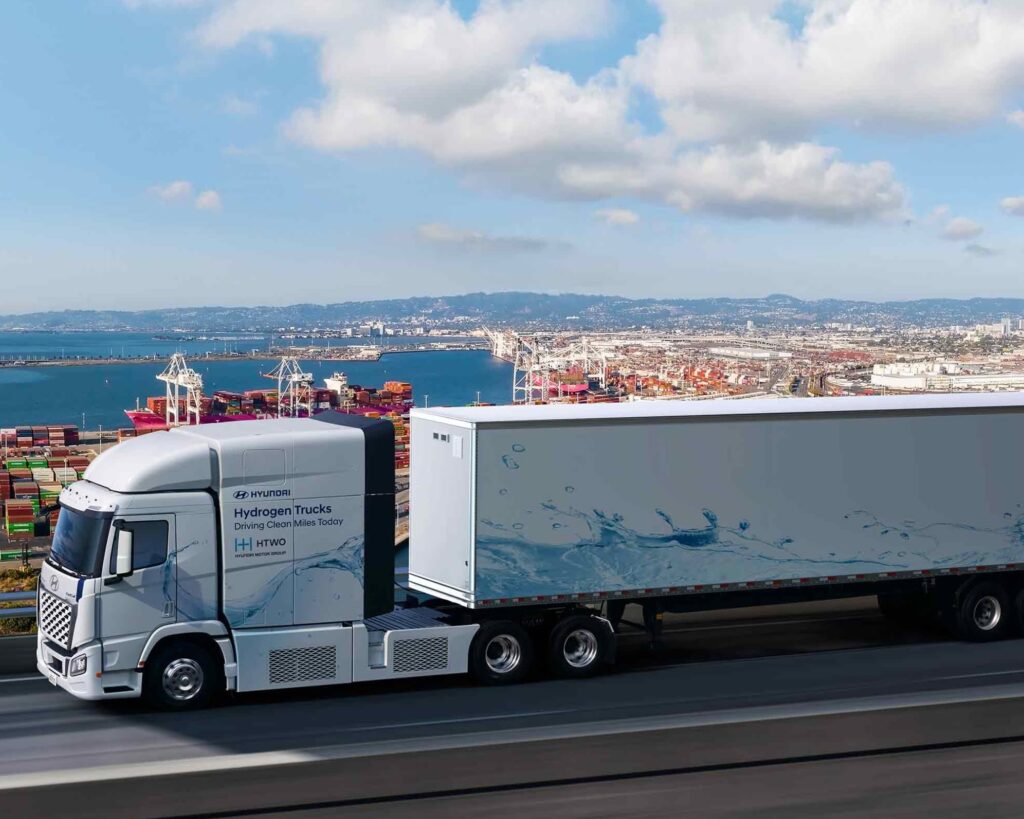
Rutgers will deploy six green hydrogen fuel cell-powered heavy-duty trucks at Port Newark
The Rutgers Center for Advanced Infrastructure and Transportation (CAIT) has received $13 million to test trucks that use hydrogen fuel cells as part of a state-funded project to develop cleaner technology for New Jersey’s critical infrastructure and operations.
The trucks will operate at Port Newark, the principal container ship facility for goods entering and leaving the Northeastern United States run by the Port Authority of New York and New Jersey. The research, which aims to position New Jersey as a hub for advanced transportation technologies, is being conducted as part of a pilot funded by the New Jersey Economic Development Authority (NJEDA).
Rutgers will manage the project and lead the research, testing the efficiency of the new technology and how it can be used to boost the state’s economy. Rutgers CAIT will work with experts from the university’s School of Engineering and the Office for Research to identify and document opportunities to build on the successes and lessons learned from this pilot.
“It’s about making New Jersey a research and development and workforce training hub for hydrogen-powered transportation,” said Ali Maher, CAIT director and principal investigator of the pilot project. “We’re demonstrating how hydrogen can be integrated into real-world transportation and logistics operations, and we will investigate its potential to drive down costs, improve performance, and support long-term economic growth. This type of applied research is critical to proving the use cases of innovative technology and paving the way for its implementation.”
The trucks will transport shipping containers from the port to warehouses, rail yards and the next leg of the longer freight journey. Currently, this short-distance transport of goods is conducted by fuel-intensive, combustion engine trucks that are typically single-purpose, serving the same short distance for their useful life.
Hydrogen fuel cells generate electricity using hydrogen and oxygen, producing only water and heat as byproducts, according to the U.S. Department of Energy. In the trucking industry, this technology can support long driving ranges and quick refueling, and because hydrogen can be made from domestic resources, also offers potential benefits for energy security and economic development.
The project will proceed in phases, beginning with procurement of the trucks and hydrogen supply and the design of the fueling site.
Truck deployment and testing are expected to start in the beginning of 2026.

